
My journey to working in Public Health began in 10th grade.  Yes, 10th grade!  There was a woman in my church that offered free step aerobics classes.  A friend and I decided to attend.  We were on the younger side to be part of this class but, none the less, we went and had a great time.  We became regulars in the class and my personal interest in fitness exploded.

My first professional role was in conducting personal training sessions and leading group fitness classes.  Working with clients was fulfilling but interactions with them often left me feeling that there was more to health than individual responsibility.

I decided to go a new direction.  After a lengthy application process, I was selected to serve as a Community Health Volunteer for the Peace Corps in Fiji.  In this role, I was exposed to health programming at the community level.  I worked with the children from the school, the village women’s group and a local youth group for teens.  With each of these “communities”, the goal was to create programming that addressed their unique needs, was meaningful and made wise use of available resources.

Upon returning home to the States, I wanted to continue my work in Public Health.  Now, when I tell people my profession, I am often asked “What actually is Public Health?”

Public Health is a field that seeks to prevent illness and injury from occurring.  It works to make the environments in which people live, work, learn and play conducive to good health.   Public Health is a broad field and includes public health nurses, health educators, nutritionists, food inspectors, emergency preparedness planners and epidemiologists.

My work falls more under the health education realm.  I work on a grant called the Statewide Health Improvement Partnership (SHIP) that strives to “Make the Healthy Choice the Easy Choice.”  Within this grant, myself and others implement policy, systems and environment changes through community partners. The best way to explain what this means is to give you some real examples.

First, let’s look at a couple of examples of policy change.  Policies surrounding healthy food are often implemented.  These policies could include that balanced meals need to be served at employer sponsored events, school vending machines only sell whole foods or hospitals not routinely offering sugar sweetened beverages with meals.    Another example of policy change is employers drafting policies for their lactation rooms that are used by mothers to express milk and/or breastfeed.

Next, let’s take a brief look at systems change.  This example will be in the health care setting.  Healthcare providers often screen for health-related behaviors, like nutrition, exercise and smoking.  All too often, patient concerns in these areas go unaddressed.  A system change would be for the healthcare provider to refer patients to community resources for nutrition, exercise or tobacco treatment.

Finally, an example of environmental change could be at a food shelf.  The food shelf can change their layout to make fresh foods more accessible and put up signs directing shoppers to the healthier items.  Another example is an employer putting small exercise equipment in the break room for employees to borrow and use during their workday.

While the opportunities for Public Health programs are endless, priorities are often selected with a focus on health equity.  Health equity is working with populations that have historically had poorer health outcomes influenced by factors such as race, income, education, disability and gender.  Health equity seeks to level the playing field and allow all people in the community to achieve an optimal level of health.

This brings me full circle.  My career began with a focus on individual health behaviors.  Now my focus is on health at the community level.  Both are important in preventing health issues.  Public Health is my passion now as it allows me to focus on health for all people in the community.

-Alyssa Wolf, MS
Health & Well-Being Consultant
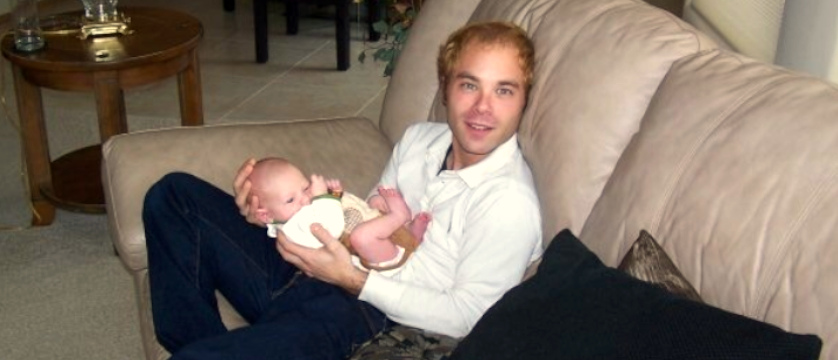
The first two years of my nephew Isaac’s life, I noticed the joy he experienced as he observed water pouring out of our bathroom faucets and the spinning of ceiling fans. I also noticed Isaac barely established eye contact with me. Around 60 years ago psychologists would have likely diagnosed my nephew with schizophrenia. Today they diagnose these symptoms under the DSM-5 categorization of Autism Spectrum Disorder (ASD). I can’t think of any other neurodevelopmental disorder that I am more passionate discussing and researching. As my nephew grew up, he would be found taking his father’s math and science books (by happenstance my brother is mathematical statistician for the United States Census Bureau in D.C.). By the time Isaac was in the second grade, he had been placed in the advanced fifth grade mathematics class (he was given this choice) and this is where he began working on mathematical equations. He remains, by all definitions, my hero. Not because of his superior intellectual functioning; but because of his ability to question everyone and everything around him in a complete curious, scientific, and genuine manner as he navigates a life with Autism.

Autism is known to impede communication skills and many misinterpret the verbal and nonverbal impairment as indicative of a cognitive disability. While some with ASD do have lower intelligence, others do not. This is why it is referred to as Autism Spectrum Disorder—the problems with communication, intelligence, and behavior are highly variable. In fact, many individuals with ASD will dramatically improve with proper therapy and treatment. Too often, however, it is believed that persons with ASD will never get far in life. And, sometimes meeting an autistic child in person only serves to reaffirm this stereotype. Some of the behaviors my nephew displays could be perceived as insulting; and others who know him understand that he has no intention of offending someone. He is simply trying to make thoughtful remarks—which, due to his difficulty with perceiving social cues, makes it hard for him to carry on a social conversation. Through my experiences with him and others like him, I have come to believe that autistic children are hardly permanently disabled. Rather, they are just missing a few neurological pathways and behavioral skills common to most other people. Furthermore, I’ve come to understand that they are capable of making new neural connections and learning new functional skills. I’ve also seen how they take great pride in their growing accomplishments!

My experiences working with children on the autism spectrum come at a time when rates are rising dramatically. As of 2014, ASD is diagnosed in approximately 1 in 68 children, a 30% increase from 2012, when it was 1 in 88 (per the CDC). This compares to about 1 in 200 in the year 2000. Scientists predict that by the year 2030, 1 in every 15 children will be autistic: approximately 1 in 10 boys, and 1 in 21 girls. Recently, there has been speculation about the causes of ASD and why its occurrence is growing at such an astounding rate. Some theories posit that chemicals in food, commonplace drugs, and other environmental influences may have led to these increased rates. My My work with people on the spectrum has led me to believe that we, as a society, need to develop a deeper understanding of autism, as well as empathize better with those living with the disorder. After all, we need to learn to accept differences in all people, helping others without judgment or uninformed bias. Given the rising rates of ASD, I also believe it’s crucial that we devote ourselves to finding the cause(s) and, in turn, a cure. Better yet, we may find what it takes to prevent ASD in the first place.

-Dr. Andy Fink, Psy.D., L.P.
Supervising Manager

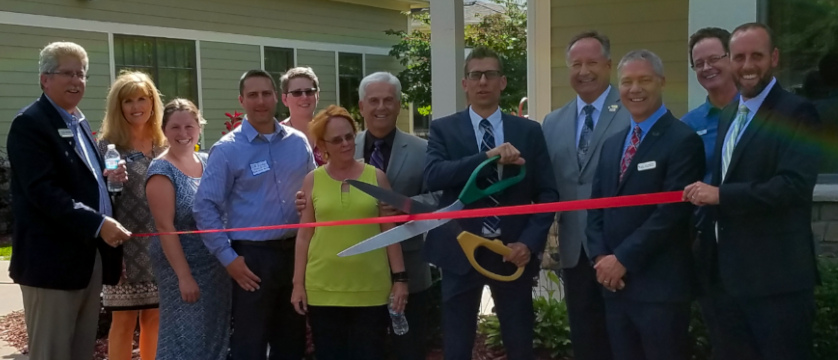
On Tuesday July 31st, Lee Carlson Center (LCC) and North Metro Pediatrics (NMP) celebrated almost a year a partnership and the opening of our Coon Rapids location with an Open House and Ribbon Cutting!

Our partnership, which officially launched in November 2017, allows easy access to mental health service providers without the need for children and their families to go to an entirely different location.
LCC therapists are now actively working with North Metro Pediatrics (NMP) to help bridge the divide between physical and emotional health. With our Coon Rapids satellite clinic across the side walk from NMP, our therapists are able to provide services within their clinic, or at the LCC office. This connection ensures a warm hand-off between the primary care and mental health providers.

We had a great time at our Coon Rapids Open House and feel so lucky to have a community partner like NMP!

A big LCC thank you to all who attended, especially to Twin Cities North Chamber of Commerce and Metro North Chamber of Commerce for your support and commemorating the day with ribbon cutting.
As well as, Sun Focus for this great news article and Coon Rapids Community Television Network (CTN) for the featured news clip!

Community is at the core of what we do at LCC, and we wouldn’t be able to do it with out the irreplaceable support given to us.

-Grace Allen, M. Ed
Development Associate

In the beginning of May we first shared the exciting news about Lee Carlson Center’s (LCC) new partnership with the Coon Rapids Police Department putting increased focus on community mental wellness.

Partnerships such as ours are beginning all across the state of Minnesota and the country to assist law enforcement in addressing community mental health needs in conjunction with law enforcement.

In our current model, an LCC staff member will ride along with a plain clothed officer to assist with 911 calls where crisis intervention, or mental health expertise, is needed.
Many individuals welcome the warm and engaging outreach and have begun to access various service opportunities with Lee Carlson Center.

We are honored to partner with law enforcement.  We take great pride in joining other organizations and police departments in collective effort to help those who need services get the help they need; while also improving the safety of the community and officers.

Click the links below to learn more about our partnership with the Coon Rapids Police Department, and why these collaborations are so important!

Coon Rapids PD partners to help with mental health issues

Crisis Intervention Team (CIT) Programs

For more information on our services or our work with law enforcement please contact: redwards@leecarlsoncenter.org

-Grace Allen, M. Ed
Development Associate

We’re now ARMHS certified through the MN Department of Human Services!
ARMHS (Adult Rehabilitative Mental Health Services) is a program for adults 18 and older living with a serious mental illness in need of more one-on-one support in a relaxed setting like their home, a coffee shop, or the library.

The goal of the ARMHS program is to reduce the risk of hospitalization by preventing a relapse or crisis. Our ARMHS team can work with clients on social skills, budgeting, crisis planning, household management, medication education, mindfulness, employment, and independent living skills.

The cost of service is billed to Medical Assistance. To learn more or to make a referral call our intake line at 763.780.3036 or submit a referral online at www.leecarlsoncenter.org.

New partnership between Lee Carlson Center and the Coon Rapids Police Department focuses on community mental wellness.

Lee Carlson Center for Mental Health and Well-Being has recently partnered with the City of Coon Rapids Police Department to offer individuals in the community mental health service options after the department responded to numerous calls at a residence.

Police department staff contact an individual who they would like to offer resources to and then, along with Lee Carlson Center staff, they travel to the individual’s residence to assess what resources and support could be offered to the individual through Lee Carlson Center’s locations in Coon Rapids and Fridley, as well as across Anoka County.

Many individuals welcome the warm and inviting approach, and have already opted into receiving services with the potential to impact their mental wellness and overall well-being.