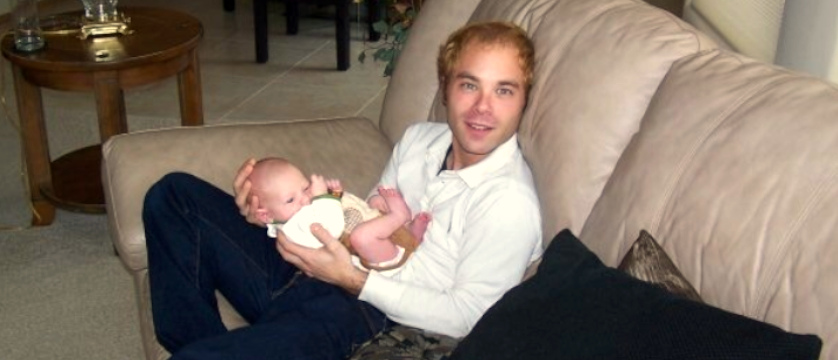
The first two years of my nephew Isaac’s life, I noticed the joy he experienced as he observed water pouring out of our bathroom faucets and the spinning of ceiling fans. I also noticed Isaac barely established eye contact with me. Around 60 years ago psychologists would have likely diagnosed my nephew with schizophrenia. Today they diagnose these symptoms under the DSM-5 categorization of Autism Spectrum Disorder (ASD). I can’t think of any other neurodevelopmental disorder that I am more passionate discussing and researching. As my nephew grew up, he would be found taking his father’s math and science books (by happenstance my brother is mathematical statistician for the United States Census Bureau in D.C.). By the time Isaac was in the second grade, he had been placed in the advanced fifth grade mathematics class (he was given this choice) and this is where he began working on mathematical equations. He remains, by all definitions, my hero. Not because of his superior intellectual functioning; but because of his ability to question everyone and everything around him in a complete curious, scientific, and genuine manner as he navigates a life with Autism.

Autism is known to impede communication skills and many misinterpret the verbal and nonverbal impairment as indicative of a cognitive disability. While some with ASD do have lower intelligence, others do not. This is why it is referred to as Autism Spectrum Disorder—the problems with communication, intelligence, and behavior are highly variable. In fact, many individuals with ASD will dramatically improve with proper therapy and treatment. Too often, however, it is believed that persons with ASD will never get far in life. And, sometimes meeting an autistic child in person only serves to reaffirm this stereotype. Some of the behaviors my nephew displays could be perceived as insulting; and others who know him understand that he has no intention of offending someone. He is simply trying to make thoughtful remarks—which, due to his difficulty with perceiving social cues, makes it hard for him to carry on a social conversation. Through my experiences with him and others like him, I have come to believe that autistic children are hardly permanently disabled. Rather, they are just missing a few neurological pathways and behavioral skills common to most other people. Furthermore, I’ve come to understand that they are capable of making new neural connections and learning new functional skills. I’ve also seen how they take great pride in their growing accomplishments!

My experiences working with children on the autism spectrum come at a time when rates are rising dramatically. As of 2014, ASD is diagnosed in approximately 1 in 68 children, a 30% increase from 2012, when it was 1 in 88 (per the CDC). This compares to about 1 in 200 in the year 2000. Scientists predict that by the year 2030, 1 in every 15 children will be autistic: approximately 1 in 10 boys, and 1 in 21 girls. Recently, there has been speculation about the causes of ASD and why its occurrence is growing at such an astounding rate. Some theories posit that chemicals in food, commonplace drugs, and other environmental influences may have led to these increased rates. My My work with people on the spectrum has led me to believe that we, as a society, need to develop a deeper understanding of autism, as well as empathize better with those living with the disorder. After all, we need to learn to accept differences in all people, helping others without judgment or uninformed bias. Given the rising rates of ASD, I also believe it’s crucial that we devote ourselves to finding the cause(s) and, in turn, a cure. Better yet, we may find what it takes to prevent ASD in the first place.

-Dr. Andy Fink, Psy.D., L.P.
Supervising Manager
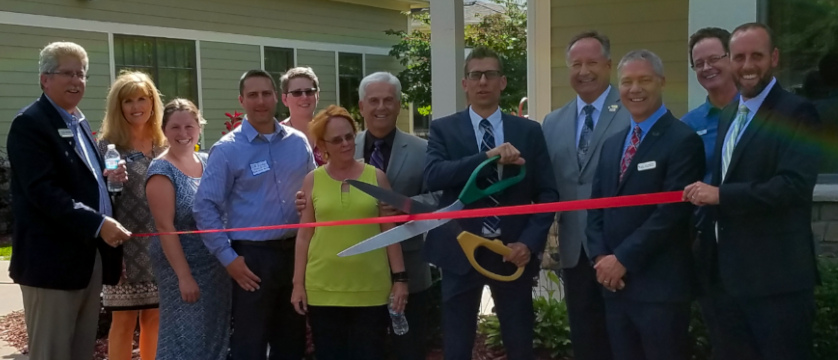
On Tuesday July 31st, Lee Carlson Center (LCC) and North Metro Pediatrics (NMP) celebrated almost a year a partnership and the opening of our Coon Rapids location with an Open House and Ribbon Cutting!

Our partnership, which officially launched in November 2017, allows easy access to mental health service providers without the need for children and their families to go to an entirely different location.
LCC therapists are now actively working with North Metro Pediatrics (NMP) to help bridge the divide between physical and emotional health. With our Coon Rapids satellite clinic across the side walk from NMP, our therapists are able to provide services within their clinic, or at the LCC office. This connection ensures a warm hand-off between the primary care and mental health providers.

We had a great time at our Coon Rapids Open House and feel so lucky to have a community partner like NMP!

A big LCC thank you to all who attended, especially to Twin Cities North Chamber of Commerce and Metro North Chamber of Commerce for your support and commemorating the day with ribbon cutting.
As well as, Sun Focus for this great news article and Coon Rapids Community Television Network (CTN) for the featured news clip!

Community is at the core of what we do at LCC, and we wouldn’t be able to do it with out the irreplaceable support given to us.

-Grace Allen, M. Ed
Development Associate

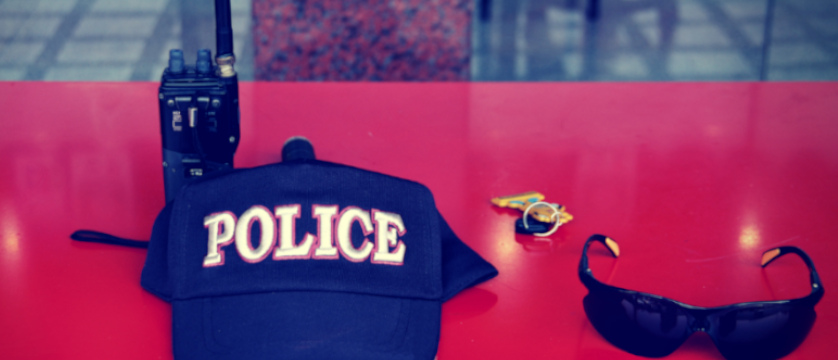
In the beginning of May we first shared the exciting news about Lee Carlson Center’s (LCC) new partnership with the Coon Rapids Police Department putting increased focus on community mental wellness.

Partnerships such as ours are beginning all across the state of Minnesota and the country to assist law enforcement in addressing community mental health needs in conjunction with law enforcement.

In our current model, an LCC staff member will ride along with a plain clothed officer to assist with 911 calls where crisis intervention, or mental health expertise, is needed.
Many individuals welcome the warm and engaging outreach and have begun to access various service opportunities with Lee Carlson Center.

We are honored to partner with law enforcement.  We take great pride in joining other organizations and police departments in collective effort to help those who need services get the help they need; while also improving the safety of the community and officers.

Click the links below to learn more about our partnership with the Coon Rapids Police Department, and why these collaborations are so important!

Coon Rapids PD partners to help with mental health issues

Crisis Intervention Team (CIT) Programs

For more information on our services or our work with law enforcement please contact: redwards@leecarlsoncenter.org

-Grace Allen, M. Ed
Development Associate

We’re now ARMHS certified through the MN Department of Human Services!
ARMHS (Adult Rehabilitative Mental Health Services) is a program for adults 18 and older living with a serious mental illness in need of more one-on-one support in a relaxed setting like their home, a coffee shop, or the library.

The goal of the ARMHS program is to reduce the risk of hospitalization by preventing a relapse or crisis. Our ARMHS team can work with clients on social skills, budgeting, crisis planning, household management, medication education, mindfulness, employment, and independent living skills.

The cost of service is billed to Medical Assistance. To learn more or to make a referral call our intake line at 763.780.3036 or submit a referral online at www.leecarlsoncenter.org.

New partnership between Lee Carlson Center and the Coon Rapids Police Department focuses on community mental wellness.

Lee Carlson Center for Mental Health and Well-Being has recently partnered with the City of Coon Rapids Police Department to offer individuals in the community mental health service options after the department responded to numerous calls at a residence.

Police department staff contact an individual who they would like to offer resources to and then, along with Lee Carlson Center staff, they travel to the individual’s residence to assess what resources and support could be offered to the individual through Lee Carlson Center’s locations in Coon Rapids and Fridley, as well as across Anoka County.

Many individuals welcome the warm and inviting approach, and have already opted into receiving services with the potential to impact their mental wellness and overall well-being.